
Confirmation Bias in Behavioral Intervention: Strategies for BIT/CARE Teams

At least once a year, I get an email or phone call from a concerned community member about a student of concern. Generally coming from a place of care, a well-meaning dean or faculty member will often explain various interactions with the student that have elevated their concern and prompted the report. Typically, in these cases, I do my best to listen, explain that we will look into it, that we follow a process, and that a member of our team will reach out to the student. I also let them know that if they learn anything else, they should not hesitate to follow up.
Fast forward a few weeks, and after looking into the matter, the team determines that it is a relatively moderate concern. Through case management and various interventions, the case will be managed, but it will likely not require more intensive or invasive intervention. This is typically when a follow-up happens with the community member who asks what is happening. In these instances, I will thank them for their outreach and concern and share pertinent but limited details about what we have found and our approach.
This is usually when the challenge comes. It can start with something as simple as the comment, “I am not sure I see it that same way.” This is where I remind myself that we are living in a post-Virginia Tech world and that it is important to continue listening in case new or additional details are shared. Unfortunately, this is often the point at which the individual reiterates their report, and based on that same report, they have decided that the matter is more serious than we are approaching it. Not to be flippant, but this is also the point at which the individual refers to a true crime podcast or a training or certification that is offered to bolster their perspective.
If I am being honest, earlier in my career, this is where I would work to end the meeting and let them know that we will continue to monitor the situation and reiterate that they should continue to share information if something new comes up. Inevitably, I would reflect on the conversation, become annoyed, and move on, but probably be relatively jaded towards the individual for a time. But there is a problem here. That approach does not truly leave the lines of communication open, and honestly, it isn’t a super beneficial approach personally. There is also another issue I will address a little later.
More recently, a team member or I would take the time to explain a little more about the process we engage in, discuss concerns and mitigators related to the situation, and how we came to our evaluation. It is also where it can be explained that evaluation is ongoing and that, should circumstances change, the approach to supporting the student will change. Transparently, this does not mean delving into the deepest elements of how the sausage is made, but rather sharing a bit more about the process and why it is important that we attend to the totality of the information we have. Sometimes this leads to greater understanding and trust; sometimes it doesn’t, but it certainly offers greater potential for a better outcome than my conversation-ending tendency.
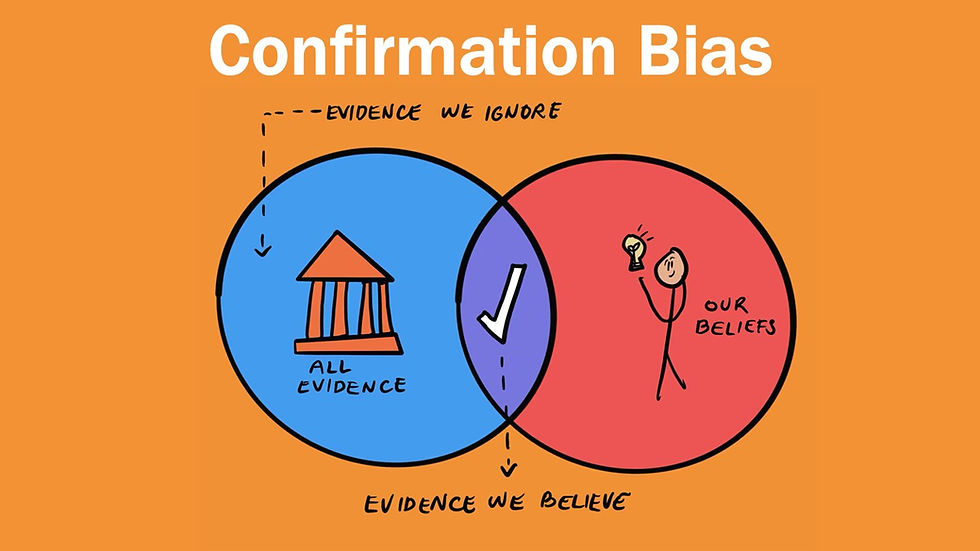
The unnamed issue in both instances above is that of confirmation bias. For the well-meaning community member, it stems from ignoring information that contradicts the outcome or opinion they have already formed. Conversely, when I allow myself to become annoyed or jaded with the situation, confirmation bias comes in the form of placing greater hesitation or scrutiny on a future report from the concerned individual. Both are challenges to effectively implementing behavioral intervention.
I am very much in the camp of people who believe that bias cannot be eliminated, nor should that be the goal. Instead, we must acknowledge and become aware of our biases so we can interpret and interrogate them when they manifest. The good news here is that intentionally implementing best practices in behavioral intervention, including consistent evaluation, leveraging a multidisciplinary team, and attending to the facts at hand, can be powerful tools for mitigating bias. Additionally, training the community and your team about this issue can also add depth, greater understanding, and dialogue about the issue.